Slab foundation repair in Spring
Sandy loam on top, clay underneath, and no city permit office. How slabs get repaired here, what it costs, and what to settle before you sign.
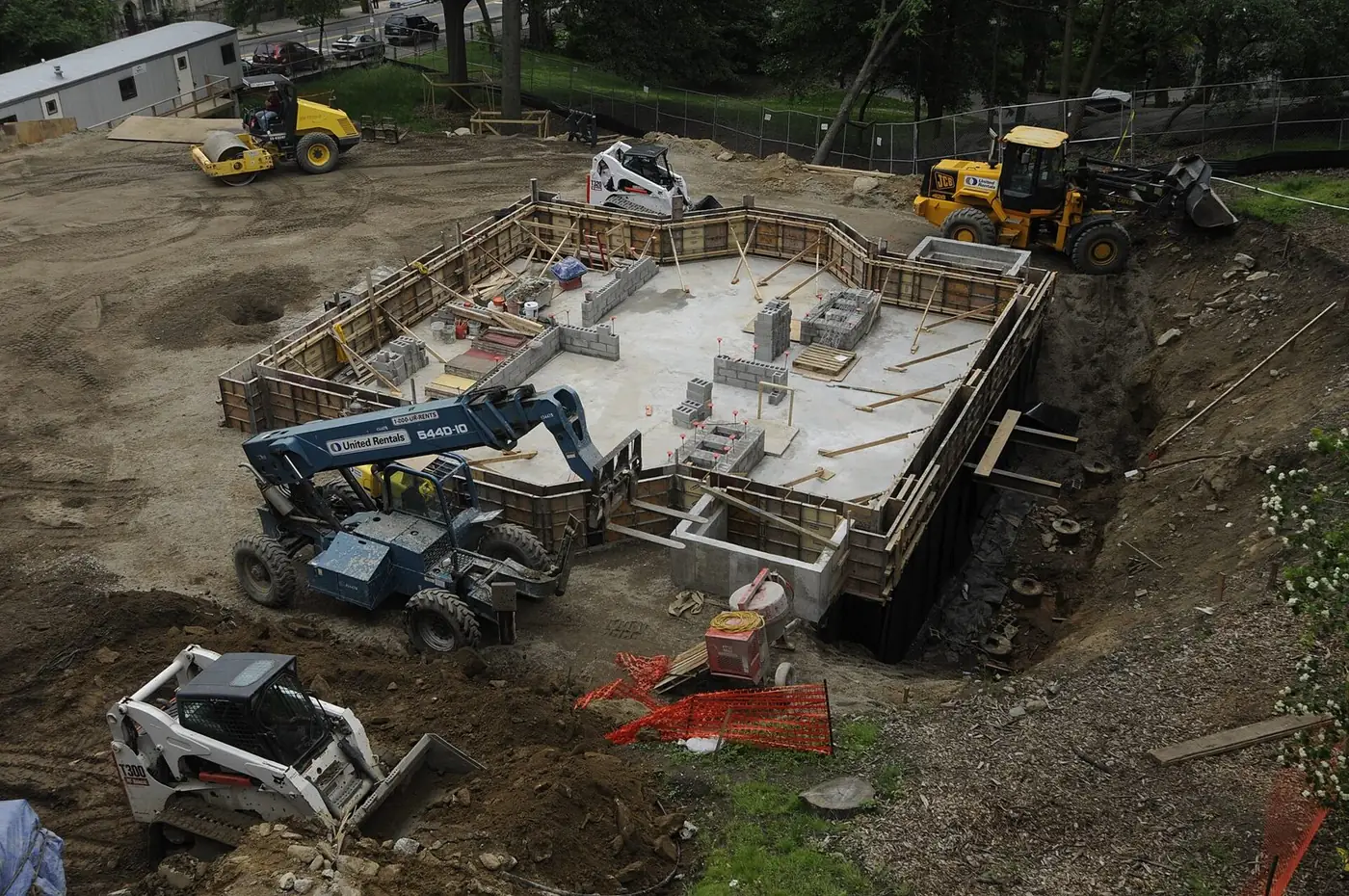
What sits under a Spring slab
The Handbook of Texas describes Harris County's soil as heavy black coastal clay to the south and sandy loam north of Buffalo Bayou, and Montgomery County, across Spring Creek, as loamy soil over deep, reddish clay subsoil. Spring sits just south of Spring Creek, the line between the two. A loamy yard can sit over clay subsoil, and clay is the part that shrinks and swells. The USDA's Web Soil Survey shows the layers mapped under your own lot.
HomeAdvisor's foundation guide puts it simply: slabs work best where the soil doesn't shift much, and settling slabs can usually be fixed with mudjacking and sealing. When settling keeps going, piers come into it.
The menu of slab repairs
- Mudjacking or slabjacking, $500 to $1,300 in HomeAdvisor's June 2026 figures. The Texas Section ASCE guidelines describe this kind of grouting as continuous support that doesn't lift the slab much.
- Piers, $1,000 to $3,000 each. They hold the slab from below and can raise the low side. The guidelines want a plan that shows where every pier goes, how big and deep it is, and what it's made of.
- Crack sealing or injection, $250 to $800. See crack repair.
- Tendon stressing for a post-tensioned slab whose cables test low, and partial rebuilding of a damaged section. Both appear on the guidelines' list of slab methods.
HomeAdvisor puts settling or sinking repairs, the jobs that usually involve piers, at $5,000 to $25,000. Against Spring's median owner-occupied home value of $231,500 in Census QuickFacts, the top of that range is about 11 percent of a house, by our arithmetic.
No city permit office
Spring is a census-designated place, not a city. Harris County says a permit is needed for all development, and in the 100-year floodplain it wants plans sealed by a Texas professional engineer. State law limits county building standards to new homes started after September 1, 2009, and we didn't find a county rule written for foundation repair. Ask the county's residential permit group at 713-274-3920. Tomball, by contrast, lists a $100 residential foundation repair permit. See permits and HOAs.
Your HOA
Foundation work can mean trenches beside the house, equipment on the lawn and changes to beds and drainage. If your subdivision has an HOA or deed restrictions, read them before work starts, and ask the contractor who handles any approval.
Lifting means testing the pipes
The ASCE guidelines say water supply and drain lines should be leak-tested whenever a repair includes jacking or lifting. HomeAdvisor lists leak repair at $2,000 to $7,000. A leak that started the settling, or one the lift caused, is cheaper to find before the floors are patched.
Six things to settle before you sign
- The number, type and depth of piers, shown on a drawing
- Whether a Texas-licensed engineer designed the plan
- Plumbing tests after lifting, and who pays for repairs they find
- Which approvals the contractor will get: county, city or HOA
- Floor elevations before and after
- The warranty terms, and whether they transfer to a buyer
Common questions
Do I need a permit for slab foundation repair in Spring, TX?
Spring has no city permit office. Harris County says a permit is needed for all development, but we didn't find a county rule specific to foundation repair. Call the county's residential permit group at 713-274-3920, and check your HOA's rules.
What does slab foundation repair cost around Spring?
We don't have Spring-only data. HomeAdvisor's June 2026 guide lists mudjacking at $500 to $1,300, piers at $1,000 to $3,000 each, and settling or sinking repairs at $5,000 to $25,000.
Get it looked at
Send the form or call to set up an inspection. There's no charge to ask.
Voicemail picks up when we can't. Give it your name, a number to call, the street address and the trouble you've noticed.